
Hamilton Parole and Probation
Parole and probation are not two names for the same status. Parole is supervised release from a Texas Department of Criminal Justice prison sentence. Mandatory supervision is another form of state release in which an eligible person serves the rest of a sentence under TDCJ Parole Division oversight. Probation, called community supervision in Texas records, is imposed by a trial court. A Hamilton County probationer may never have entered a TDCJ prison.
The source must match the status. The Texas Board of Pardons and Paroles decides parole and mandatory-supervision cases. The TDCJ Parole Division then supervises people after state release. The Bosque-Comanche-Hamilton Community Supervision and Corrections Department handles ordinary adult probation tied to a local court order. A court clerk preserves the judgment, supervision order, modification, revocation, and discharge documents.
| Point | Parole or mandatory supervision | Probation |
|---|---|---|
| Source | State prison sentence | Hamilton court order |
| Decision maker | Texas Board of Pardons and Paroles | Sentencing judge |
| Local supervision | TDCJ Temple District Parole Office | Bosque-Comanche-Hamilton CSCD |
| Key proof | TDCJ status and release record | Filed court and CSCD record |
- Parole
- Conditional release from prison before the sentence endpoint.
- Mandatory supervision
- A statutory form of state release under supervision for an eligible sentence.
- Community supervision
- The Texas record term commonly used for probation ordered by a court.
- Discharge
- The formal end of a sentence or supervision term, not merely a change of office.
Verify Hamilton Release Supervision
Begin with identity and custody type. Names can collide. A TDCJ or state identification number is stronger than a name alone for a state case. For probation, use the Hamilton case number and the court that entered the order. Misdemeanor records belong with the Hamilton County Clerk, while felony district records belong with the District Clerk. A docket note is useful, but a filed order carries more detail.
- Check the TDCJ Inmate Information Search for a state prisoner. Compare the number, offense, county, location, projected date, and parole-review information.
- Before a parole vote, use the Board status line at 844-512-0461. After a favorable vote, use the Parole Division release-status line at 512-406-5202.
- For state supervision after release, confirm the assigned office through the TDCJ district parole directory. Hamilton routes to Temple DPO.
- For probation, identify the sentencing court and contact the Bosque-Comanche-Hamilton CSCD through the Texas CSCD directory.
- Obtain the judgment and later supervision or discharge order from the correct Hamilton clerk when the legal status must be documented.
A released person is not confirmed by a live jail roster. Hamilton does not publish an official local roster, and Hamilton defendants may be housed in Bosque, Lampasas, or another county. The holding jail's booking-out record establishes its physical event. State or local supervision records answer what followed. The broader Hamilton County released-inmate record path connects the holding jail, court authority, and later status.
Important: A favorable parole vote can set future conditions. It does not prove that TDCJ completed the physical release.
Hamilton Release Offices Split
Hamilton County has an unusual geographic split. State parole and mandatory-supervision cases are served by a TDCJ office in Temple. Ordinary probation is handled by a multicounty CSCD serving Bosque, Comanche, and Hamilton. The two agencies may deal with people in the same region, yet their records arise from different legal acts and should not be merged.
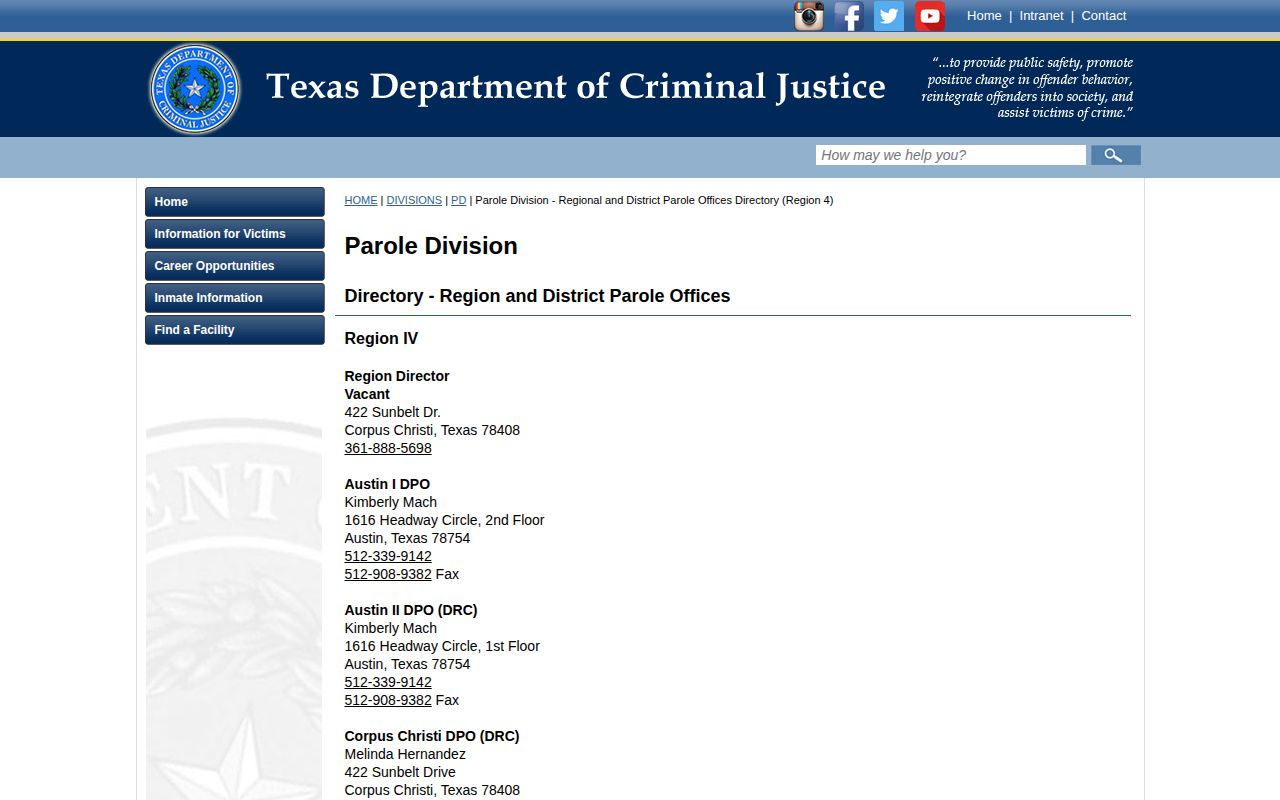
The official Region IV directory lists the parole office used for Hamilton state-release supervision. Its entry is reproduced below so a caller can ask whether that office is the proper contact for a known state case.
2751 Northeast H K Dodgen Loop, Suite 300
Temple, TX 76504
Phone: 254-933-0535
Fax: 254-933-0536
The directory image confirms that Hamilton state-release supervision is routed outside the county.
For a probation case, use the CSCD directory and the filed Hamilton order instead. Do not ask Temple DPO to confirm ordinary probation. The sentence itself tells which channel is right.
Hamilton Parole Review Status
Texas does not hold a standard public parole hearing for each person. An Institutional Parole Officer interviews the person and prepares a case summary. A designated board office sends the file to a three-member panel, and members vote in sequence. Two matching votes make the decision final. There is therefore no conventional Hamilton County parole-hearing calendar to search.
The Board review process and the person-specific TDCJ record serve as the practical schedule. Initial reviews may begin months before eligibility. A review date means the file can be considered; it is not an exit date. FI codes can approve release when eligible, in a stated month, or after a named program. NR and SA are denial results. RMS concerns mandatory supervision. Preserve the full code and conditions.
The TDCJ telephone channels divide pre-vote and post-vote questions. That split prevents a vote result from being mistaken for completed release.
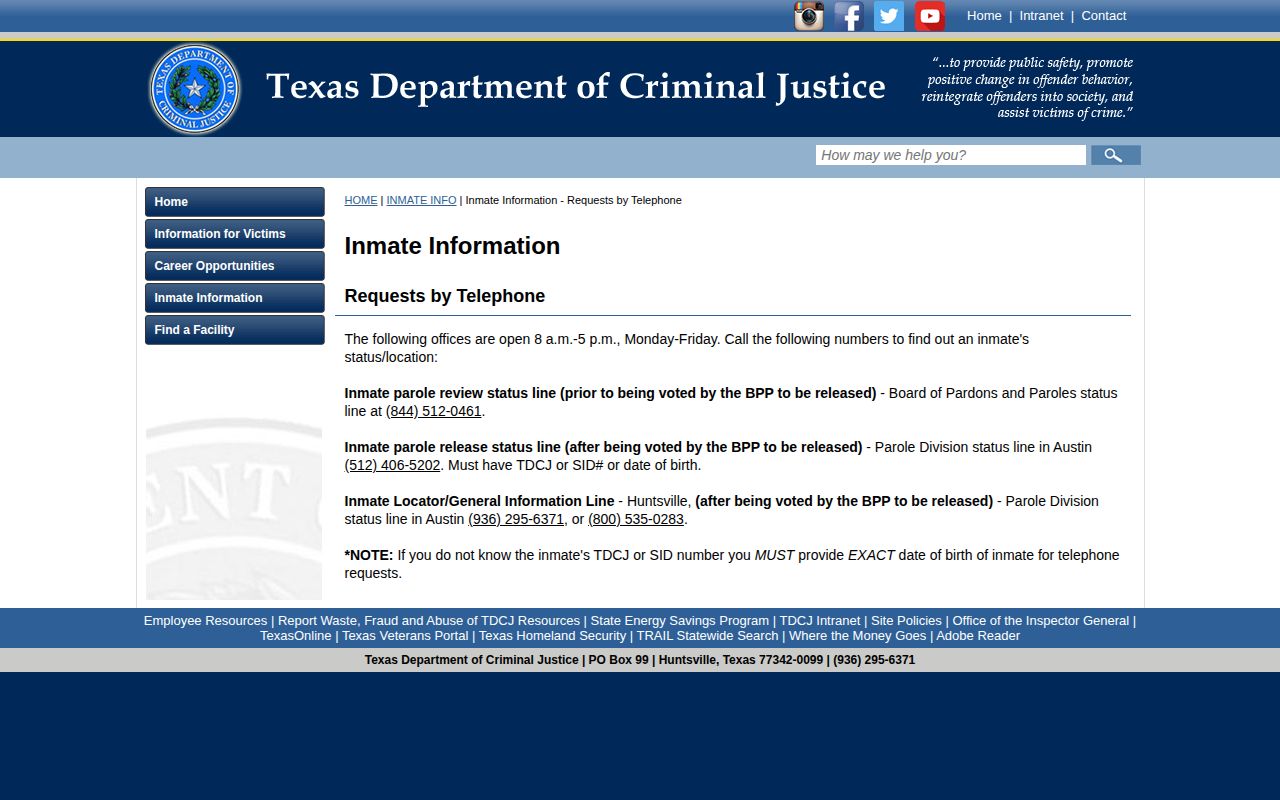
After approval, the Parole Division line is the better source for physical processing. Before a vote, the Board line addresses review status.
Note: Eligibility permits review under the law tied to the offense date; it never guarantees parole, release, or supervision in Hamilton County.
Hamilton Supervision Violations
Conditions are the rules attached to supervision. They may include reporting, travel limits, treatment, payments ordered by a court, or other case-specific terms. The actual order controls. A violation allegation is not the same as a final revocation. Revocation is the formal act that ends community placement and can return a person to custody after the required process.
An absconder is someone alleged to have stopped reporting or left supervision without permission. Research found no official Hamilton County absconder list. Do not infer that status from a missed appointment, an old address, or failure to appear in an online search. Contact the correct supervising office and use the court docket for a filed warrant or revocation action. A new jail record may show custody, but it does not explain the full supervision decision.
Texas IVSS-Counties may issue an event notice when a participating agency supplies data. It is a notification service, not a warrant database and not the official supervision record. An alert should be checked against the agency named in the notice.
If a violation leads to custody, trace each step. The supervision office supplies the alleged status. The court or Board record supplies the legal action. Hamilton Sheriff can identify a local holding county, and that jail supplies its booking and later release or transfer event. One source should not be made to answer for all four layers. A warrant can remain in a court file after the person moves, while a jail roster can change before the supervision record catches up.
Hamilton Supervision Discharge Records
Supervision ends through a formal record. For probation, look for the court's discharge, early termination, revocation, or completion entry and confirm it with the clerk. For parole or mandatory supervision, use TDCJ records and the Parole Division. Maximum-expiration discharge means the sentence endpoint was reached. It should not be described as ongoing parole.
A person can leave a jail while a supervision matter remains open. The reverse can also occur: a past discharge says nothing about a later, unrelated case. Preserve the date, agency, status label, and source. If TDCJ search results disappear, retry with the TDCJ or SID number and use pia@tdcj.texas.gov or the locator line. Search absence alone does not prove discharge.
For a documentary record, ask for existing material with a narrow description. A state request can identify the incarceration history, release type, release date, and discharge status. A local request can identify the Hamilton case, supervision order, later modification, and final discharge or revocation order. Keep the state and court records in separate columns when comparing them. That approach preserves who made each decision and prevents a release from prison from being confused with the end of all supervision.
Mandatory supervision deserves its own label. It is a state sentence status and is supervised by the Parole Division, even though it is not the same as a discretionary parole grant. Probation remains a court status. When a record says only “supervision,” use the judgment, TDCJ number, and named office to identify which one applies. Temple DPO association can support current state supervision, but it should not be used to reconstruct the exact time a person left prison.
The filed Hamilton judgment and the state release record answer different parts of the history. The first explains the sentence. The second documents TDCJ's action. Together with a discharge entry, they avoid treating a projected date, parole vote, or office assignment as final proof.